There is a minute, basing on a scaffolding plank thirty feet above a slate roof, when the wind hits in different ways. You feel the building take a breath through the copper. The slate sweats faintly before dawn, and a brand-new finial is still cozy from the lantern. That is where the difference in between a satisfactory reproduction and an antique item lives, in the last eighth of an inch at the tip, the seam that vanishes against the sky, the geometry that honors a century of climate. Finial manufacture, done appropriately, lugs a building's tale to its highest point.
I have actually invested 20 years forming steel for steeples, cupolas, dormers, and the many quirks that roofings require. Deluxe, in this area, does not shout. It dawns in silence, like a spindle that checks out as one line from the street or a weathervane base that never ever catches the eye because it fits so normally. The customers who appoint Custom Finials for historical spires recognize this. They respect profile, aging, and durability. They understand that a finial is greater than an ornament. It finishes the roof's grammar.
Where a Finial Shows the Eye
On most historic structures, the roof covering speaks a language of percentage and shadow. A mansard needs weight at its corner, a Gothic spire needs lift. The finial is that accent. Early French designs favor a series of reducing drums, each with a bead or ogee, topped with an apex that points past energy into devotion. Shingle-style towers like a softer end, a pear-shaped terminal or onion bulb with a quirked collar that plays with light.
The challenging component is that the eye knows when it's incorrect. Place a too-thick collar below a long apex and the tower reads squat. Cut corners on height and an eighty-foot steeple feels clipped. On a repair in Newport, our first layout left the terminal sphere five-eighths of an inch undersized. From the grass it looked fine. From the road it looked shy. We made it over, bumped the diameter 8 percent, then squeezed the point with a crisp half-round grain. The whole tower snapped into emphasis. That is the work.
Metals That Age Well at Altitude
Material selection is not a second thought, it is the instrument's voice. The very best finials are peaceful superstars, sustaining salt, acid rain, and years of freeze-thaw cycles without problem. The list includes copper, lead-coated copper, zinc, and building bronze. Stainless steel belongs, carefully made use of, where strength demands and exposure is low, such as concealed armatures within tall spires.
Copper stays the requirement for Custom Finials due to the fact that it moves with temperature level and takes an aging that flatters almost any kind of masonry. On a coastal site, it will certainly environment-friendly from the salt within 5 to fifteen years, faster if the wind brings regular spray. Inland, anticipate a slow-moving bloom, very first nut-brown after a couple of seasons, then a deep delicious chocolate by year 5. Verdigris is not assured beyond the coastlines and cities, yet also the browns are good-looking and honest.
Lead-coated copper excels on reproductions where a softer gray suits limestone or weathered slate. It is much less fancy on the first day and never goes after intense dimes throughout the skies. Zinc provides a cooler gray with a satin radiance. It stands up to deterioration well, and its aging tightens rather than flakes. Building bronze is a deluxe unto itself. It holds a peaceful radiance that just improves in the second years, relocating from cider to burnished chestnut. Bronze costs much more, and you feel it in both material and security throughout installment, however it gives a historic spire a note that copper can not quite sing.
Salvo Steel Functions has profited combined steels on tall tasks, setting bronze terminals on copper bodies with hidden stainless pins. The contrast, managed with restriction, checks out like a fine watch: glints where they count, calm elsewhere.
Anatomy of a Durable Finial
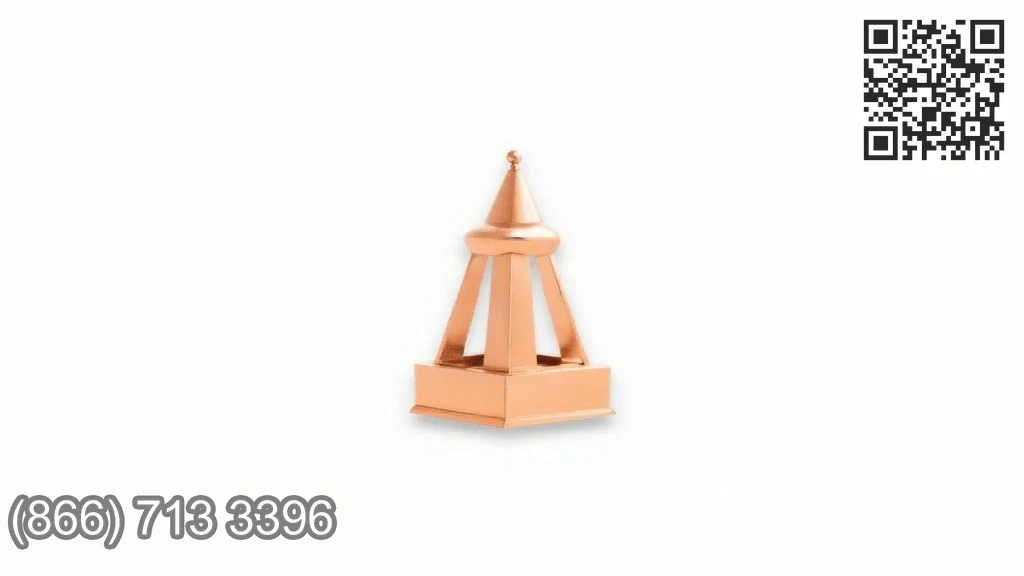
The bones of a finial are simple when mapped out and complex when developed. You begin with a base that connects to the roof covering or cupola. Over that, a shaft or pile of drums. After that a collar or grain, in some cases numerous. Then a terminal that can be a spear, a round, a fire, a fleur-de-lis, a stylized wheat sheaf, or a slim needle. Every component ought to have a job, every line a reason.
Bodies gain from taper, also when it is hardly noticeable. A straight cyndrical tube on a steep roofing can resemble it leans. A two-degree taper up a three-foot section brings lift without promoting itself. Collars should resolve shifts, not conceal them. A sharp grain can damage a darkness neatly, while a torus can soften an abrupt change. The terminal, the last six inches, have to be crisp. If it blunts rapidly, the entire assembly looks tired by year two.
Hidden within, a finial needs a back. On smaller sized items, a copper or bronze pole will do. On high spires, especially those surpassing 5 feet over the roofline, a stainless steel core with bonded gussets at each drum avoids flutter. I have seen a fifteen-foot finial on a church in western Massachusetts twist with the wind at 50 miles per hour like a fishing pole. It endured for several years, however the steel around the seams cried stress. We replaced it with a stiffer core, reduced the unsupported spans with internal bulkheads, and the structure lastly rested via storms.
Traditional Techniques that Still Matter
Machine shops can shear, bend, and swage successfully. They can not phony hand judgment where the roof covering meets the skies. The greatest joints on outside work are secured, not simply soldered, and every lock requires forethought. A double-locked standing joint on a long taper carries water down and wind around without spying open. It also gives the craftsmen a place custom copper finials to conceal a small modification in profile.
Soldering is both adhesive and gasket. For copper job, a 50/50 tin-lead solder is standard, but several jurisdictions now push for lead-free. I have made use of 96/4 tin-silver with success, readjusting warm and pacing. Lead-coated copper wants its very own rhythm, cleaned carefully to prevent fish-eyes, then tinned with persistence. The best seams are narrow and glossy, then cleaned to matte. On bronze, we typically braze with silicon bronze rod for unnoticeable strength, complied with by a controlled patination to blend the color.
Spinning has its place as well. When an incurable ball should be excellent, metal rotating on a turret can produce matched hemispheres that fulfill on a hairline joint. The risk is sterility, so we frequently break the excellence with a subtle hammered structure or a chased after line. Hand-raised kinds like onion bulbs lug device marks that catch the sunlight in such a way a rotated item never will. The option relies on the structure's personality and the proprietor's hunger for handcrafted nuance.
The Dialogue with Architecture
An attractive finial without context is costume fashion jewelry. A refined finial that completes a roofing is couture. The language of the host building need to lead the layout. On a Federal home with a brand-new belvedere and custom cupolas, the finials like slender percentages with a little urn and a needle. The same elevation on a Romanesque church needs more body and a bolder base to avoid vanishing against a hefty cornice.
We often start with a cardboard silhouette held at range, after that a sheet-metal mockup complete dimension. On one Georgian Revival manor in Connecticut, the designer defined a best illustration for the dormer finials. On the roof covering, in place with Customized Dormers and copper standing seam, the pieces really felt a whisper tall. We cut the incurable by three-quarters of an inch, added a hair much more fillet at the collar, and the dormers lastly spoke the house's language.
This is the worth of a craft company that looks at the whole envelope, not just the idea. Customers who involve Salvo Metal Works for Custom Roofing System Vents or Personalized Chimney Shrouds commonly find that their finial wish becomes part of a wind and water trouble. A shadow that quiets a downdraft can share a profile with the tower finial. Leader boxes can resemble the very same bead as the collar. When whatever balances, the eye relaxes and the building checks out as one idea.
Structural Reasoning Hidden in Ornament
Wind is the finial's lifelong enemy. Stress climbs with height, and gusts can function like a boxer, not just a constant press but strikes from different instructions. That is why accessory matters as high as craft. A finial base should link structure, not simply enhance sheathing. On stonework spires, we set bronze plates with threaded rod epoxied into the stone, separating different steels with gaskets. On lumber frameworks, we through-bolt a stainless plate into blocking that spreads lots, after that slip the copper skirt over covert bolts. The expose remains tight, rain runs, and nothing flaps.
Water is the peaceful saboteur. Wherever steel changes direction, especially where an upright fulfills an incline, capillary activity can carry moisture under a joint. We respond to with hemmed edges that raise the circulation far from the lock, soldered dams inside that you never see, and thoughtful drips at the base. A criminal in the wrong area will certainly tarnish a slate for decades. A clean drip on a finial skirt preserves both the steel and the roofing system below.
Lightning belongs in this discussion as well. A finial is a natural leader. On historic frameworks, we incorporate the lightning arrester right into the finial or provide a sis spike with a braided copper downlead that never ever announces itself. The link has to be mechanical and long-lasting, not a clamp that loosens when the steel breathes. Oftentimes, the stainless core becomes part of the conductor, carefully adhered to the system so the power finds earth efficiently.
Restoration Values and Reproduction Accuracy
Working on a 120-year-old apex asks for humility. You remain in discussion with artisans that addressed most of your issues prior to you were born. On a slate church in Providence, we pulled a smashed finial that had actually weathered four cyclones. The seams were tight in a manner modern-day code police officers would certainly not honor, the solder rosin smelled like a stogie box, and the terminal had been re-soldered at the very least three times with various hands. We measured every span, photographed every ding, after that made patterns that respected the irregularities. The brand-new piece, in lead-coated copper, looks right because it is not clinically ideal. It breathes like the original.
Documentation issues. Magazines from the 19th century show prevalent accounts and their percentages. A typical blunder is to scale a design linearly when the original had non-linear partnerships, such as a base size that expands faster than elevation as dimension boosts. We keep scale sticks noting bead sizes as percentages of surrounding drum diameters. A bead that reviews appropriately is commonly between 7 percent and 12 percent of the diameter it caps, differing by style.
Where the initial had mechanical bolts visible, we let them show if the architectural language sustains it. Concealing whatever for contemporary minimalism robs a structure of its age. There is poise in a bronze rivet head that captures late mid-day light.
Patterns, Templates, and the Present of Repeatability
The romance of handwork makes it through due to the fact that it is also functional. Good patterns conserve weeks. A finial with 3 stacked drums and a fluted collar might call for a six gores per drum. Laying those out from scrape invites compounded mistakes. We develop repeatable templates in Mylar and slim aluminum, each labeled with joint allowance and bend angle, and save them flat in the store collection. When a client orders matching Custom-made Finials for numerous Custom-made Dormers or for the edges of a grand cupola, we can reduce with confidence that the 5th item will certainly agree with the first.
Jigs for locking seams at strange tapers are worth their king's ransom. An easy wood form with a bent notch enables you to establish a lock regularly without wounding the metal. For rounds and bulbs, pitch obstructs for increasing and planishing tame persistent curves. None of this is glamorous, however it transforms art into a dependable service.
When Solutions Meet: Incorporating Finials with Other Roofing Elements
A finial does not drift. It rests among snow guards, roofing vents, leader heads, and the practical tools that maintain a building dry. Luxury dawns when these components converse.
On a lakefront lodge with deep eaves and a central lantern, the owner wanted a collection of Custom Snow Guards that would not read like a second thought. We developed copper blade guards with a small turned grain that matched the collar account on the light finial. The snow guards marched up the slate with quiet authority, and the finial crowned them with the very same voice. Custom-made Roof Covering Vents on that particular job used a louver pattern that resembled the finial's fluted drum. Even the Custom Leader Boxes obtained the finial's drip information. Your home changed in wintertime. As snow piled, those grains traced lines of intent via the white. That is choreography, not coincidence.
Custom Smokeshaft Shrouds additionally share this vocabulary. A shadow with a superficial domed cap and a copper needle finial can really feel foolish unless the major spire settles likewise. Link them with proportion, not simply form. A needle that is 10 percent of the cap diameter on the shroud might intend to be 7 percent of the drum listed below on the steeple to make up range. It is math heated by judgment.
Site Truths: Gain access to, Climate, and Time
From a workdesk, a finial is geometry. On website, it is logistics. A lot of the most effective residences resist devices. A six-foot finial on a narrow city street might call for a weekend crane with authorities information. A church spire hemmed by trees desires rope gain access to and person riggers. You learn to break assemblies right into components that can travel up ladders and with hatches, after that pin and solder in place without scarring the finished patina.
Weather determines. Moisture over 70 percent makes complex change and solder. In summer, a copper surface can climb over 150 levels in the sunlight, making lead-free solders sluggish and unforgiving. We set up field soldering early mornings or bring shade with tarps and persistence. Winter wind stiffens hands and whips heat away. There is a wonderful band of problems, and it shifts by website and season.
Time issues as well. A common three- to six-foot Custom-made Finial, with a conical body, one or two collars, and a basic terminal, takes 40 to 80 store hours from layout to last patina, plus layout and templating. Include fluting, chasing, or a complex weathervane base and you pass 120 hours swiftly. Clients who value craft enable the schedule to match the work.
Patina, End up, and the Promise of Age
Shiny is a stage, not a location. Some owners enjoy the very first months when brand-new copper glows like sundown. Others request for pre-patinated coatings so the item shows up with worked out self-respect. Both stand paths. What matters is honesty. Fabricated verdigris can look staged if splashed greatly and left blotchy. A light hand with liver of sulfur on bronze, or regulated fuming on copper to alleviate the brightness, reads truer.
We commonly send a finial out bright, after that return after a year to clean and wax, especially on bronze. A microcrystalline wax like Renaissance will certainly not stop oxidation, but it slows down finger prints and contamination, and it gives the steel a low, museum-grade appeal. On lead-coated copper, we scrub flux deposit gently with a nylon brush and pure water, then let the climate do its work. Finish is a collaboration in between the store and the sky.
Maintenance that Appreciates the Craft
A well-made finial asks little bit. It appreciates a glance throughout gutter cleaning, a check after a significant storm, and a light touch when something looks off. Bolts loosen up, particularly where timber steps. Solder can break where vibration hides. Many concerns reveal themselves early as a rattle or a pale tarnish path.
There are three maintenance truths I show to proprietors. Initially, do not polish copper finials with rough compounds unless you want to reset the clock to the first day and approve uneven weathering. Second, maintain different steels apart. A steel holiday decor wired to a copper finial will flower galvanic drama by springtime. Third, budget for a small solution check out in year two or 3, not due to the fact that something fell short, however because a tiny turn of a wrench or a spot of solder then saves scaffolding cash later.
Commissioning with Confidence
The ideal tasks begin with a discussion concerning the entire roof covering, not just a photograph of a wanted idea. Share altitudes, site photos, and a feeling of the structure at different hours. If there are Customized Dormers planned, or customized cupolas in growth, or a demand for quiet but efficient Custom-made Roof Vents, claim so. A craft store like Salvo Metal Works can weave a single language through all of it. We do not offer components. We compose ensembles.
Pricing follows complexity and product. A modest copper finial for a little cupola might begin in the low thousands, while a big, bronze-capped spire or a household of matched finials for a lengthy ridge can climb up into five figures. What you acquire, past the metal, is judgment. It displays in the way a collar snuggles against slate, in just how a joint lands in shadow, in the restraint to stop when the line is right.
Case Notes from the Field
Two projects stay with me. The very first was a lighthouse keeper's home on the Mid-Atlantic shore, battered by salt and wind. The tower had actually shed its original finial to a storm in the 1970s and coped with a blunt cap since. We studied archival pictures, scaled the picture from the brick programs, and made a lead-coated copper body with a bronze needle. We set the needle on a hidden stainless spigot, after that peened a soft bronze collar over it. The initial winter, gulls perched and accepted. Five years on, the bronze is tawny, the lead layer a velvet gray, and the tower looks whole.
The secondly was a hill estate with a grand main cupola and four pavilion roofing systems. The designer desired unity without repetition. We developed a family: a strong, fluted finial for the cupola, smaller cousins for the structures, and echoing beads on Custom Leader Boxes and discreet Custom-made Snow Guards. The patina program had the finials pre-aged to a deep brownish, while the seamless gutters and boxes began bright. Over 2 years, they met in the middle. The owner told me he prepared his evening strolls to catch the last light on the grooves. That is the reward.
Why Finials Still Matter
Luxury architecture respects ends. A staircase is worthy of a newel that claims stop, a cornice deserves a shadow that states sufficient, and a roofing is worthy of a finial that states this is where we leave the earth. Customized Finials, made patiently and intelligently, do more than enhance. They complete thoughts. They indicate care from a distance and hold up against examination up close.
In a world of stamped components and brochure solutions, the handcrafted tip of a historic spire continues to be stubbornly personal. The hand that transformed the bead, the eye that focused the needle, the calm in the solder line, these are not noticeable as boasting, they are visible as convenience. Clients that request that level of work, and that weave it attentively with sibling components like Custom-made Smokeshaft Shrouds, custom cupolas, Customized Dormers, Personalized Roof Vents, and Custom Leader Boxes, boost their buildings past expense into grace.
From the scaffold, with the community stopped below and the skies closer than it really feels on the ground, you comprehend the opportunity. You established the last piece, burnish the seam, and step back. The line against the perspective is tidy. The building exhales. And the small, brilliant reality at the top belongs to it, and to time.
Salvo Metal Works
Office - (630) 857-3631
Toll Free- (866) 713-3396
[email protected]
566 W 5th Ave, Naperville, IL 60563
 Ask ChatGPT
 Ask Grok
 Ask Perplexity
 Ask Claude
 Ask Google AI
 Ask You